
Ask an AI image generator for a plain white sneaker held up to the camera, and there’s a real chance it draws a recognizable brand logo on it — a Nike swoosh, an Adidas stripe pattern — even with nothing about that brand anywhere in your prompt, and even with explicit negative-prompt terms trying to block it. This happened to us building a product shot for an unrelated project: a clean, otherwise-correct generation came back with an unmistakable swoosh on the shoe. Negative-prompt terms for the brand name didn’t stop it.
Why this happens
Certain product shapes are so overrepresented in training data, tied so tightly to one brand, that the model reproduces the brand marking as part of “what this object looks like” — not as a response to your wording. A classic low-top sneaker silhouette is one of those shapes. Blocking the brand’s name in your negative prompt doesn’t help, because the model was never following an instruction to add the logo in the first place; it’s reproducing a visual association baked into the shape itself.
What actually fixed it
Not a prompt tweak. What worked was changing the framing: instead of a clean, static product shot (the shoe held up, facing the camera, nothing obscuring it), switching to a mid-task, partially-obscured framing — hands and tools in front of the logo area, the product not posed for a clean reveal. The product-shot framing itself was priming the brand association as much as the shape was; take away the “here is a pristine product photo” context and the model has less reason to complete it with brand marking.
Trying to reproduce it, fresh, for this piece
We generated a new clean product shot and a new mid-task shot, from scratch, specifically for this article — and ran the clean product-shot framing four separate times to see if we’d catch the same defect again.
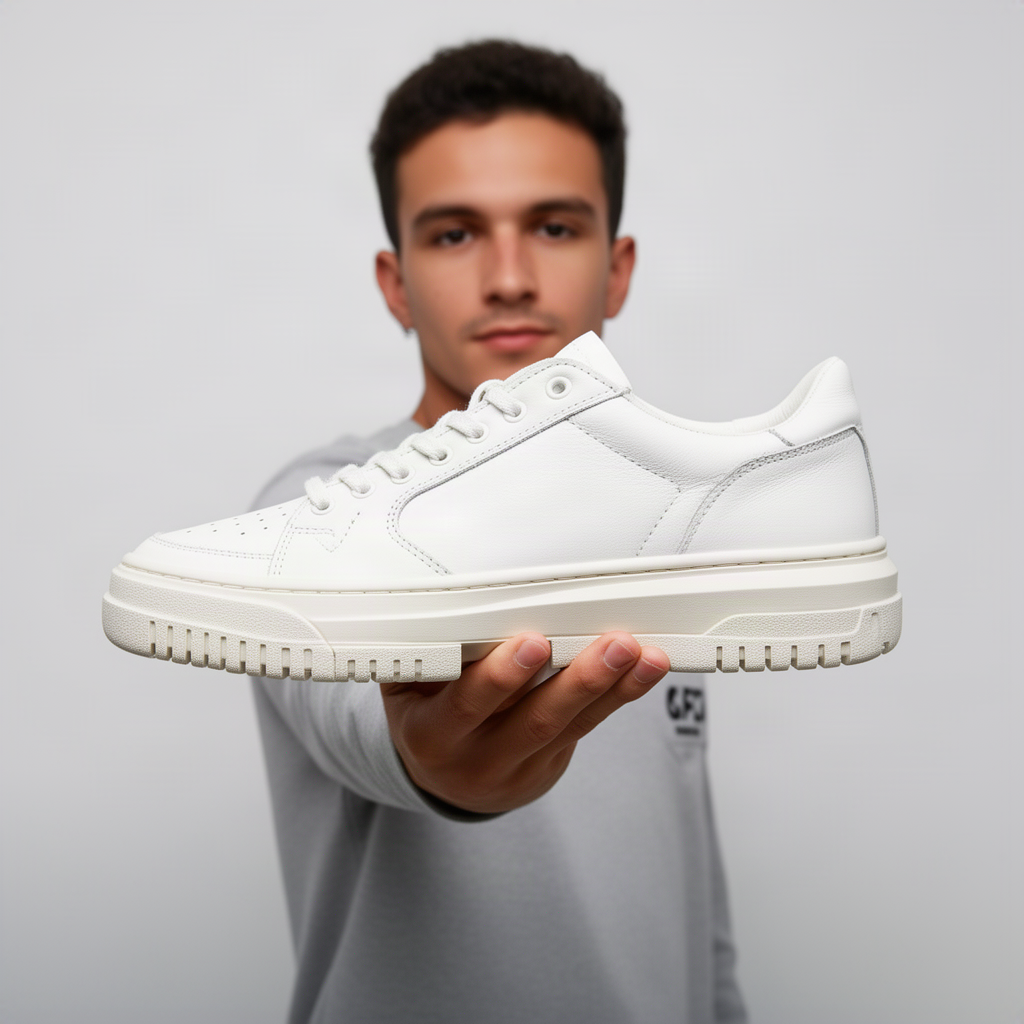
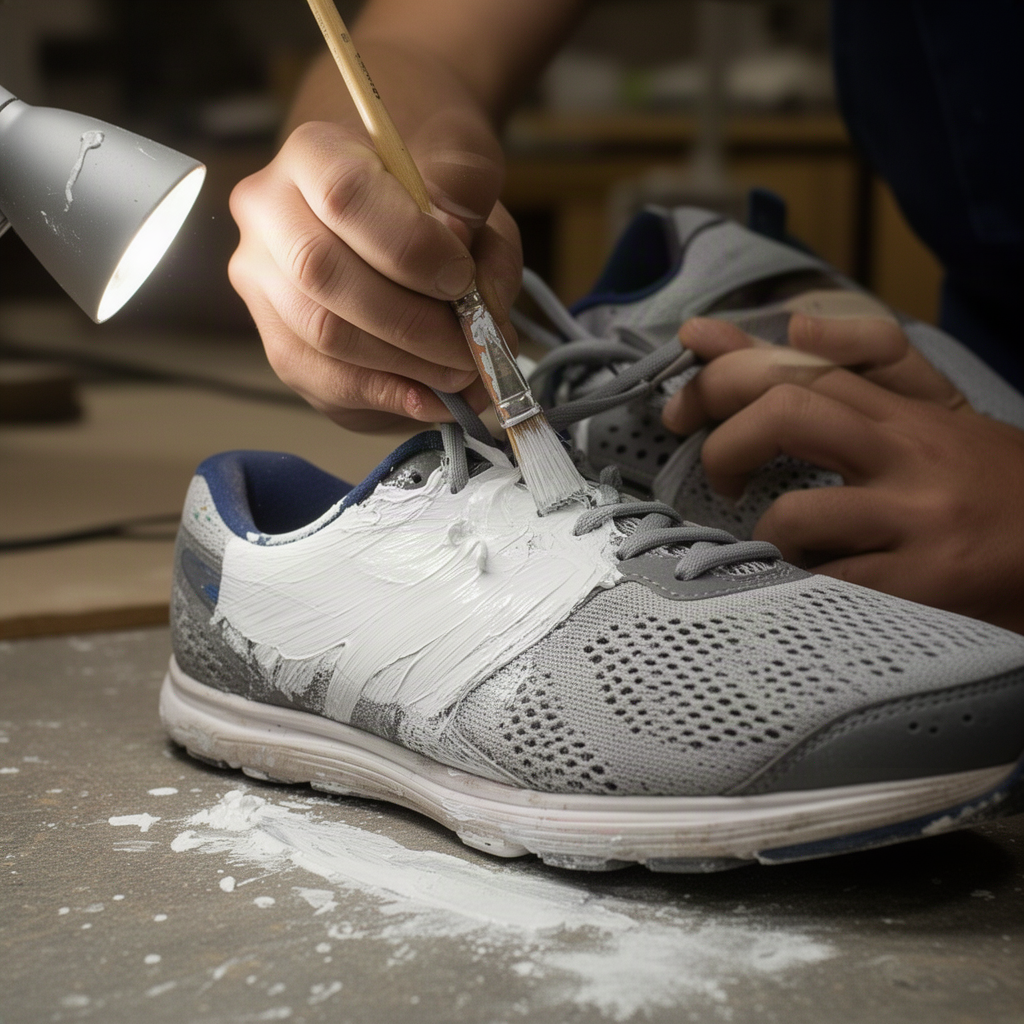
None of the four reproduced a logo. That’s not a contradiction of the original finding — it’s actually the important part of it. This isn’t a bug that fires every time; it’s a real risk that shows up intermittently. You can test a framing three or four times, see clean results, and ship it — and then have the defect show up on generation #20, in production, on the exact same prompt. A defect that only sometimes appears is arguably more dangerous than one that always does, because it slips past small-batch testing.
The practical takeaway
If you’re generating product imagery of anything with a well-known real-world shape — sneakers, certain electronics, iconic packaging — don’t rely on negative-prompt terms to block brand marking; they target the wrong mechanism. Instead, choose a framing that doesn’t invite a clean, logo-visible reveal in the first place: partial obscuring, mid-motion, an angle that doesn’t present the branding surface directly. And don’t treat a clean small test batch as proof the risk is gone — this kind of defect is exactly the sort that a handful of good generations can hide.
Both images above were generated fresh for this piece on fal.ai, the same platform behind our portrait-realism study and our voice-quality piece.